Learn Odara ETL by building pipelines.
A guided route from your first CSV to a scheduled, documented, production-shaped pipeline, with the files included and a certificate at the end. Short videos and walkthroughs for one feature at a time. Live cohorts for teams.
Videos 4
Short clips of Odara in motion.
Walkthroughs 15
Step by step with screenshots, at your own pace. Exercise files included where it says so.
 10 min
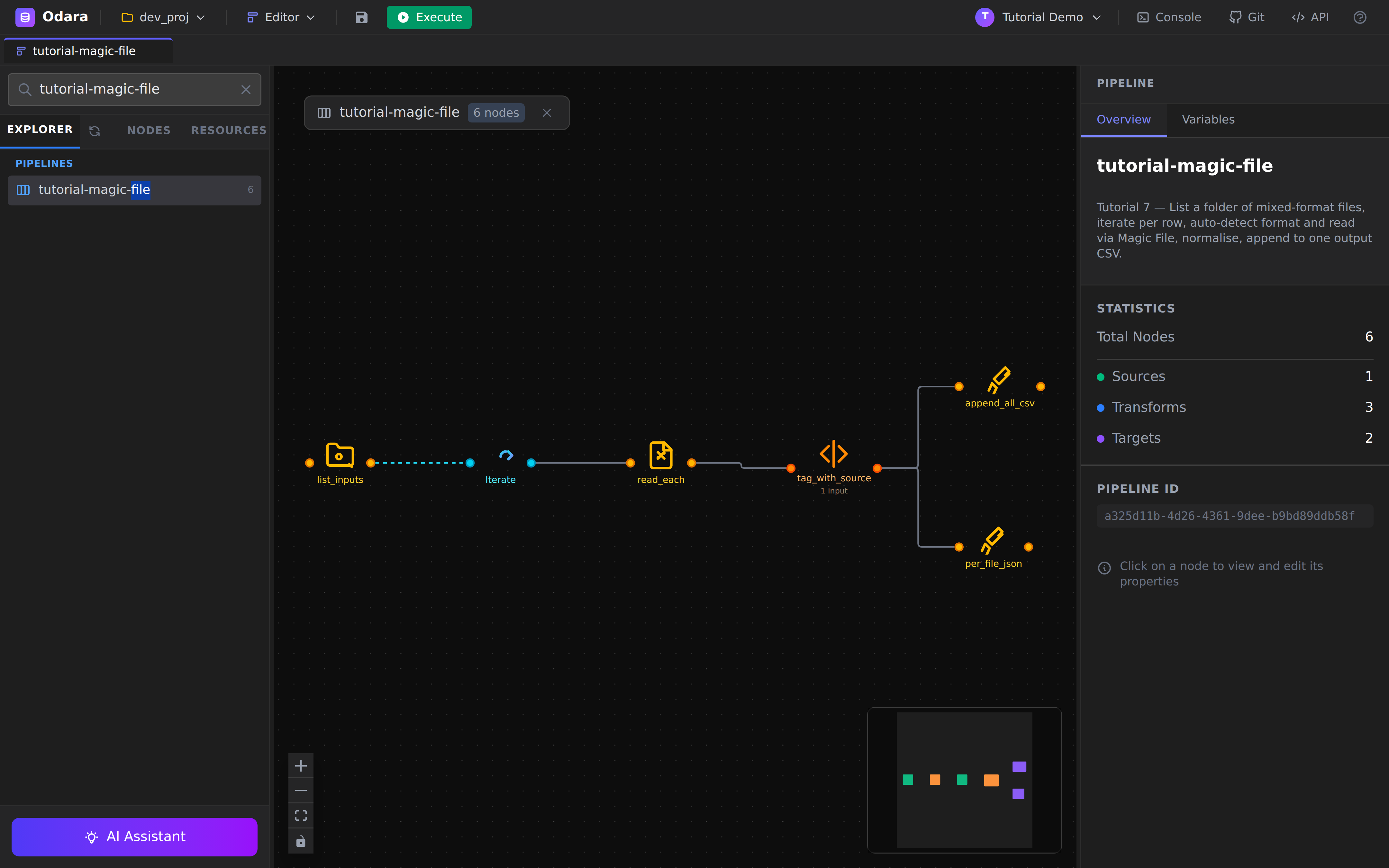
Magic File + Iterate — one pipeline for a folder of mixed formats
List a folder with FileList, loop per file with Iterate, auto-detect CSV/Excel/JSON with Magic File, and append everything into one tagged CSV. Files included.
 14 min
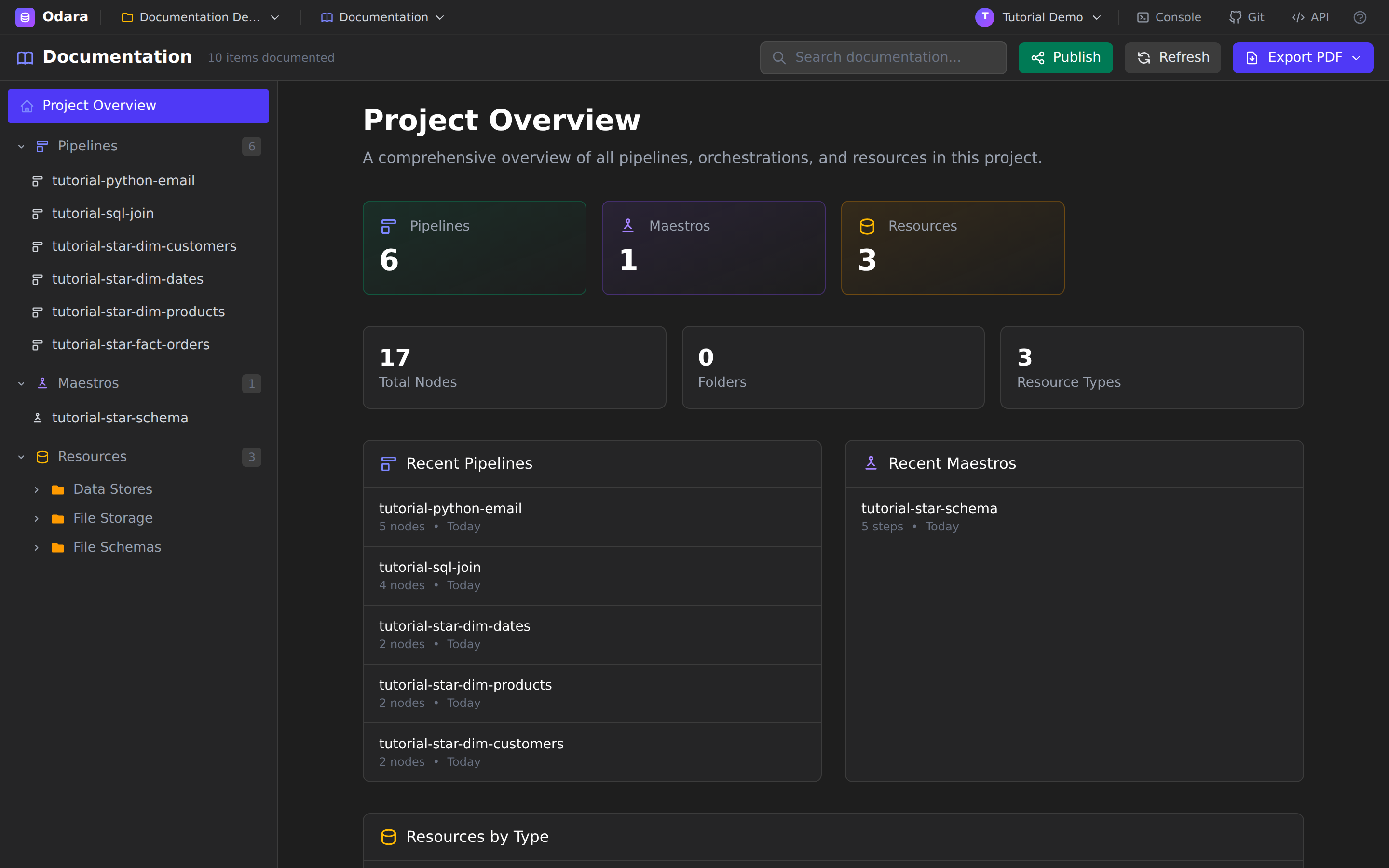
Documentation — auto-generate, export, and publish your project docs
Odara reads your whole project and turns it into living docs — diagrams, node configs, and connections. Browse it, export a print-ready PDF, or publish an access-controlled shareable site.
 12 min
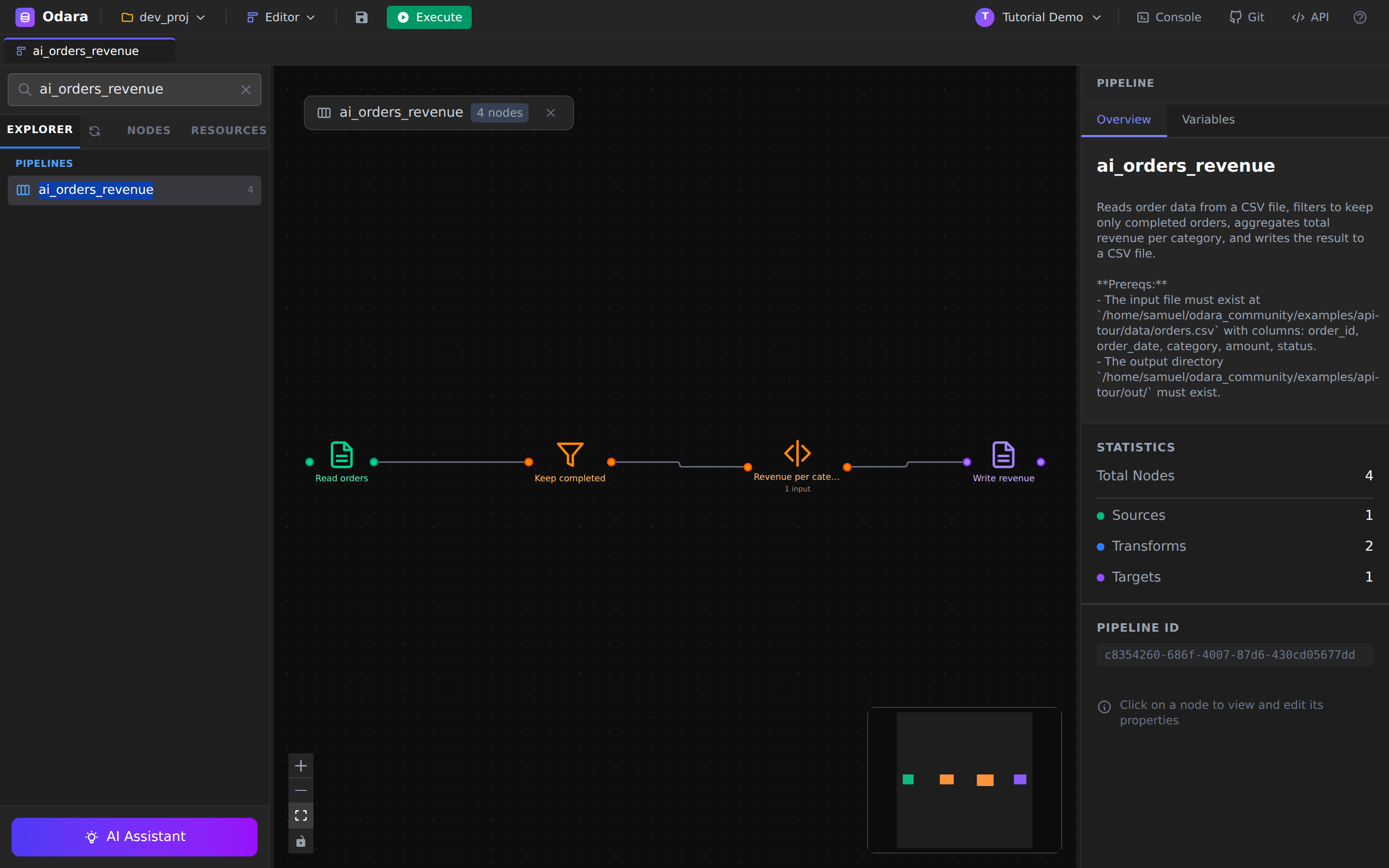
The API — build, run, and orchestrate pipelines without the UI
Everything the UI does, over REST: create a pipeline as JSON, let the AI build one from a sentence, stream a headless run, infer schemas, and orchestrate with Maestro. Real curl, copy-pasteable.
 12 min
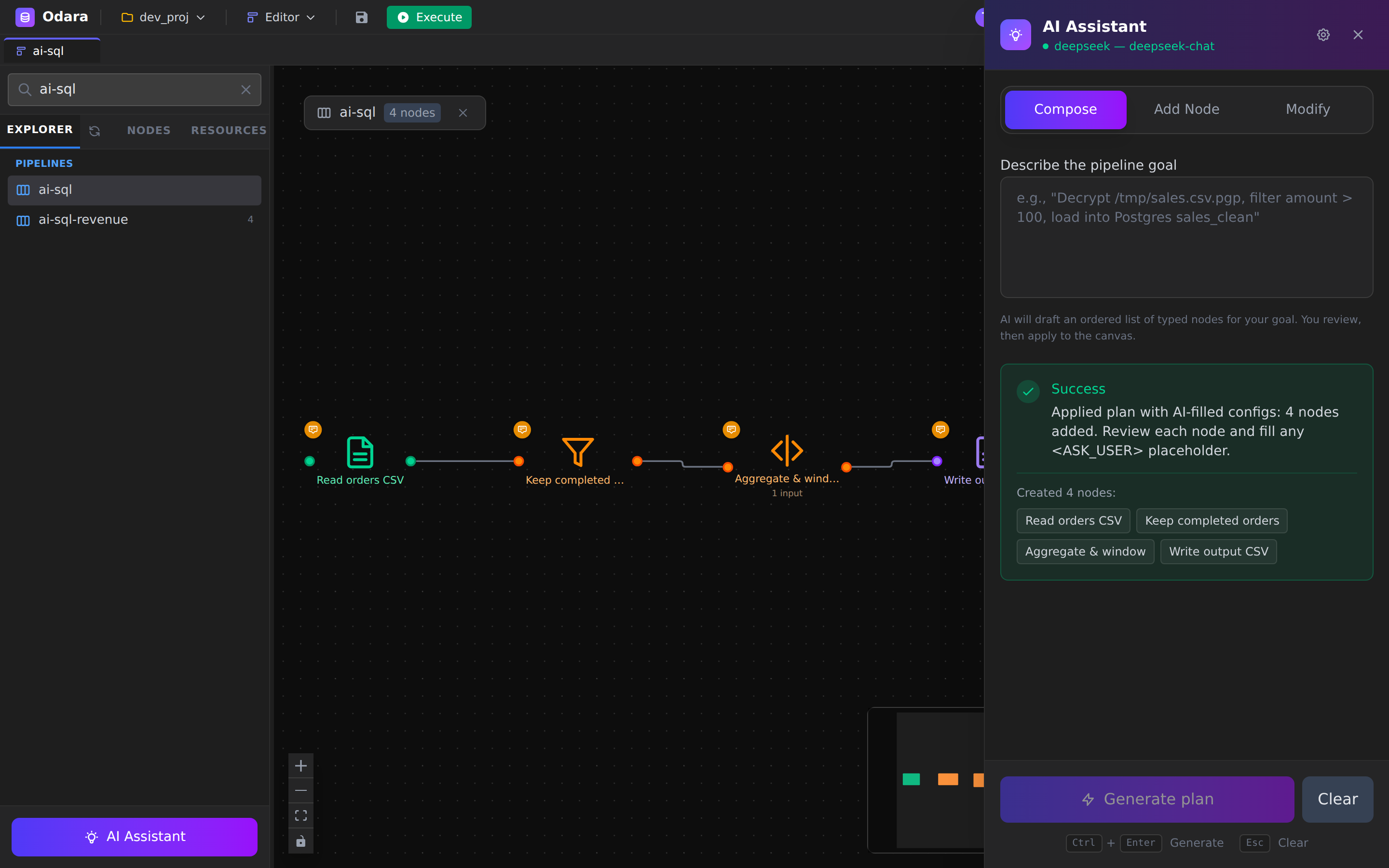
AI Assistant (SQL) — describe a pipeline, get a working SQL transform
Type one sentence and the AI Assistant plans and builds the whole pipeline — source, a SQL Transform with a window function, and a target — that you run as-is. Files included.
 12 min
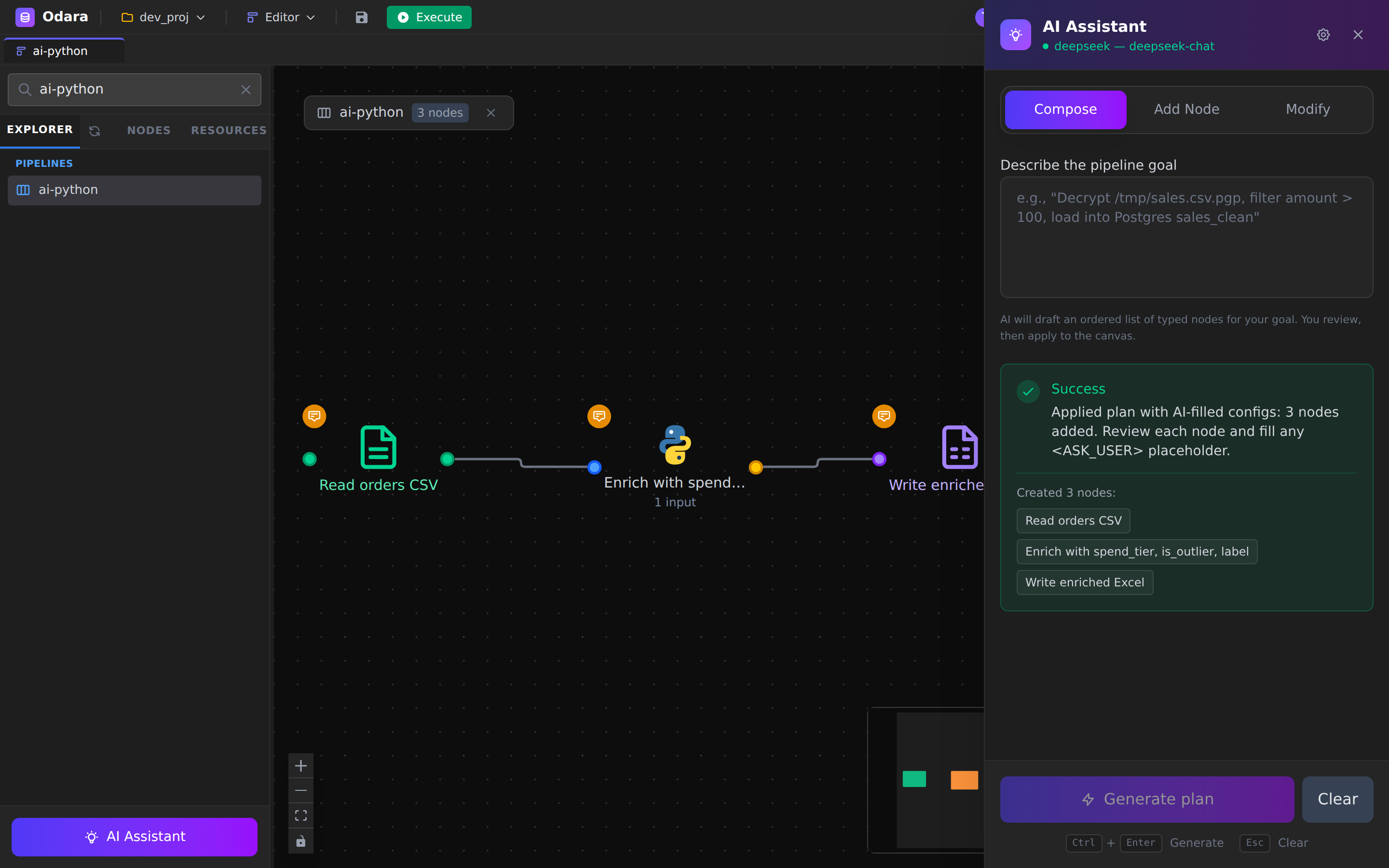
AI Assistant (Python) — describe a pipeline, get a pandas transform
Describe an enrichment and the AI builds a CSV → pandas transform (quartiles, z-score outliers, labels) → Excel pipeline. Files included.
 7 min
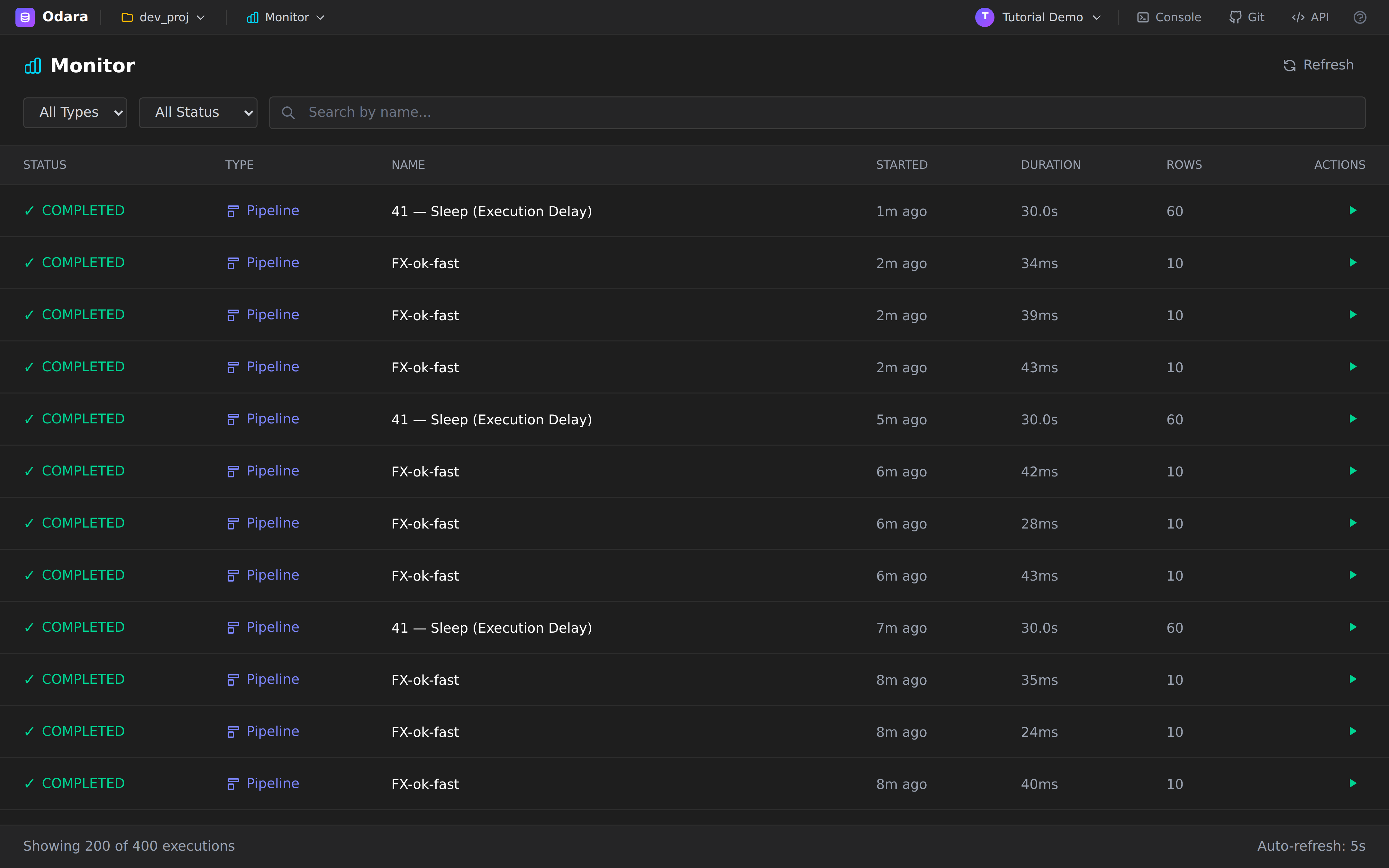
Monitor — see what your pipelines are doing
A step-by-step tour of Monitor — the page where every run shows up. Filter, search, re-run, and read execution details.
 7 min
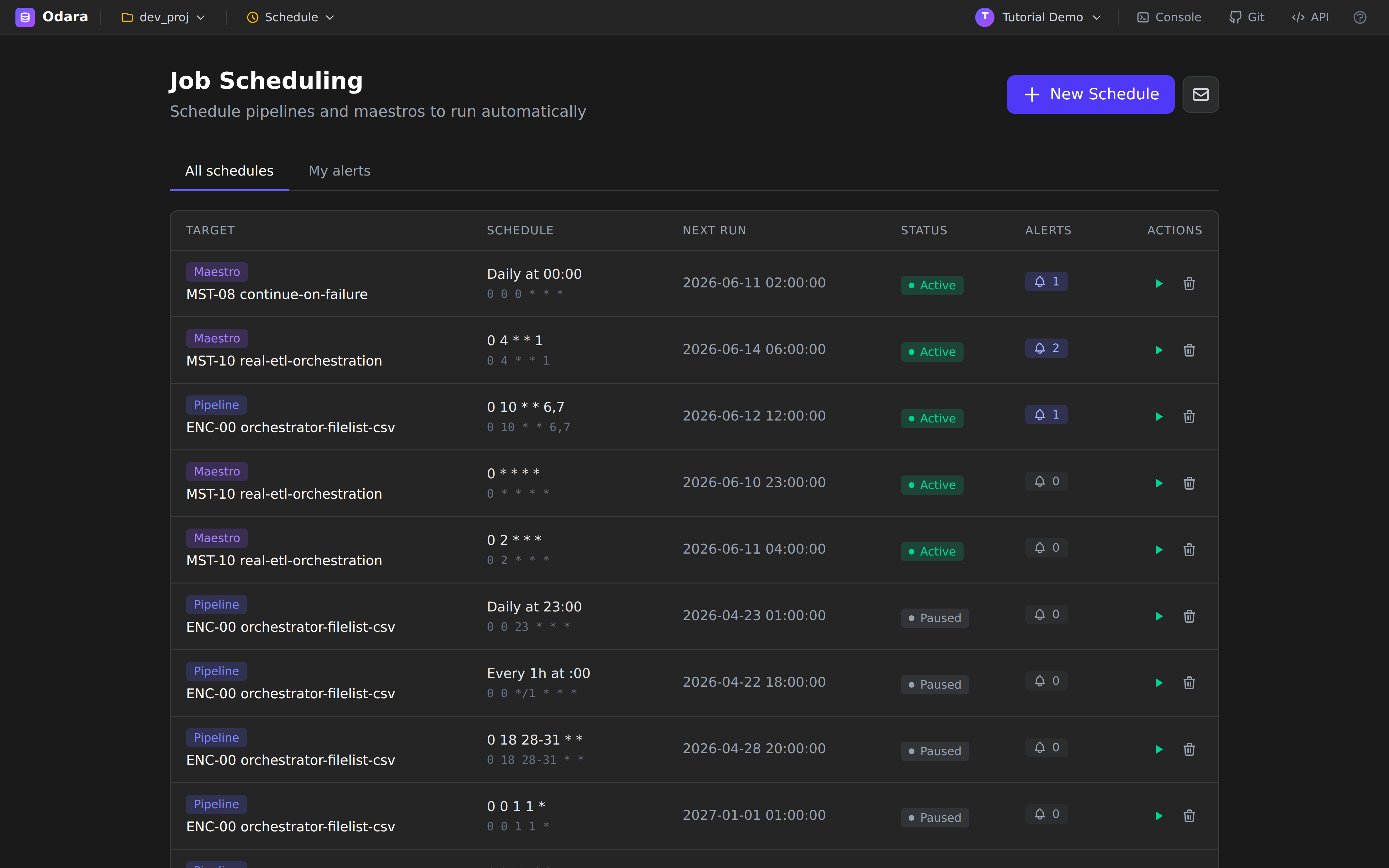
Schedule — run your pipelines automatically
Set up daily, hourly, or custom cron schedules; configure SMTP-based email alerts; pause, run-now, or delete.
 8 min
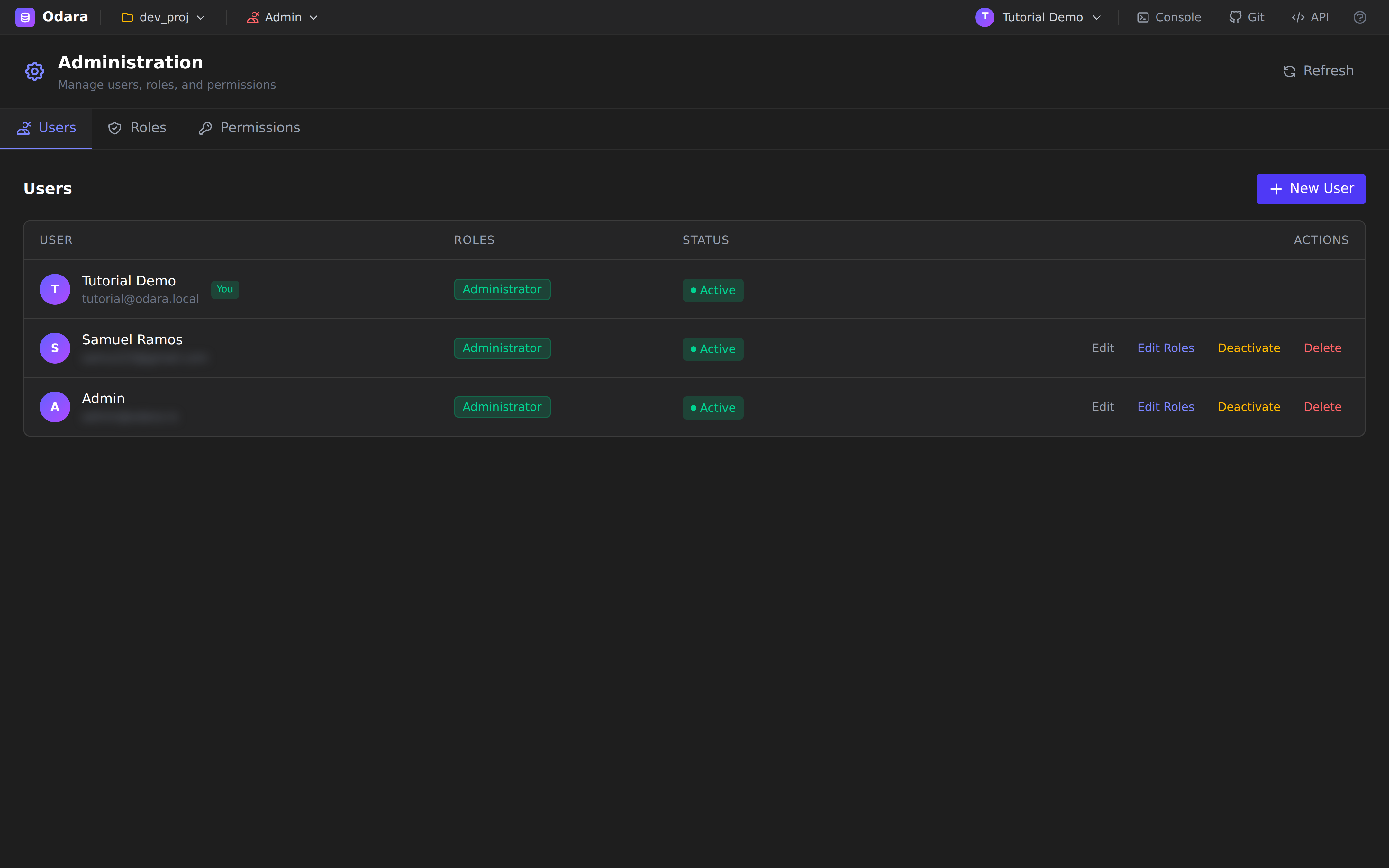
Admin — manage users, roles, and permissions
Add users, change role assignments inline, deactivate vs delete, browse system roles, build custom roles from the permission catalog.
 10 min
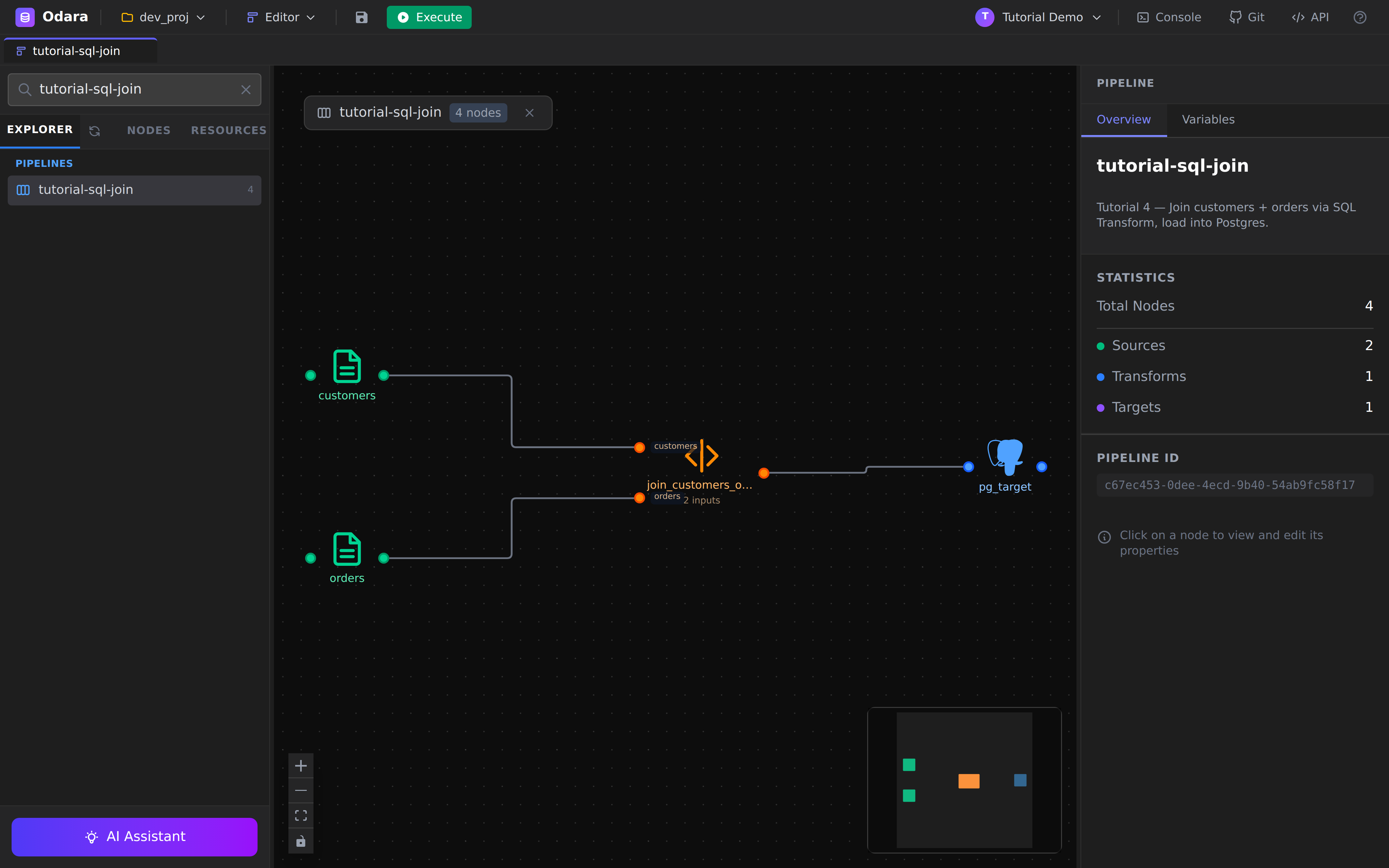
SQL Join — combine two CSVs and load into Postgres
Wire two CSV sources into one SQL Transform, JOIN on a key, write the joined rows into a Postgres table. Files included.
 10 min
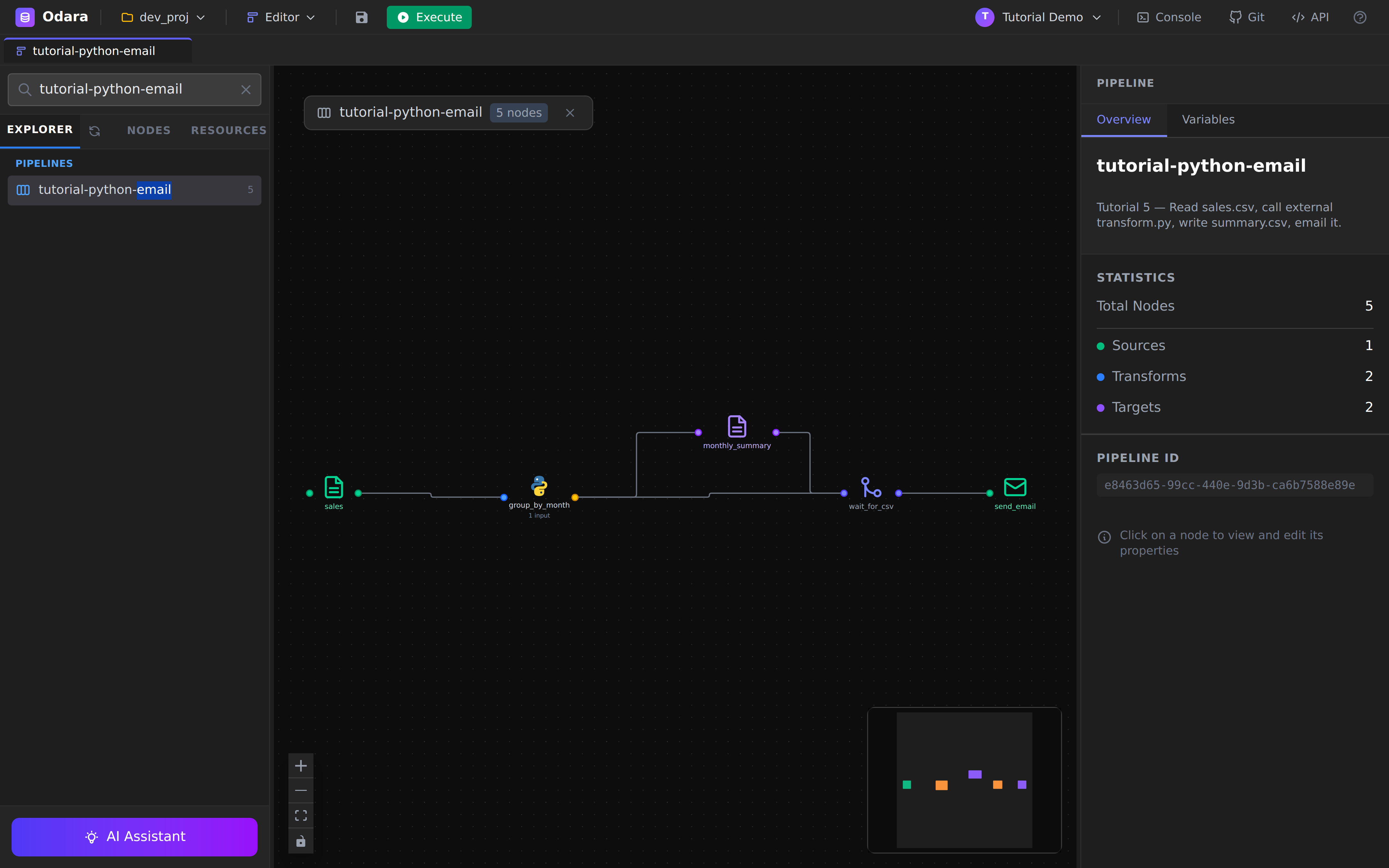
Python external + Email — call a script, mail the result
Read sales.csv, call an external transform.py with pandas, write the summary, and send it as an email attachment. Files + script included.
 15 min
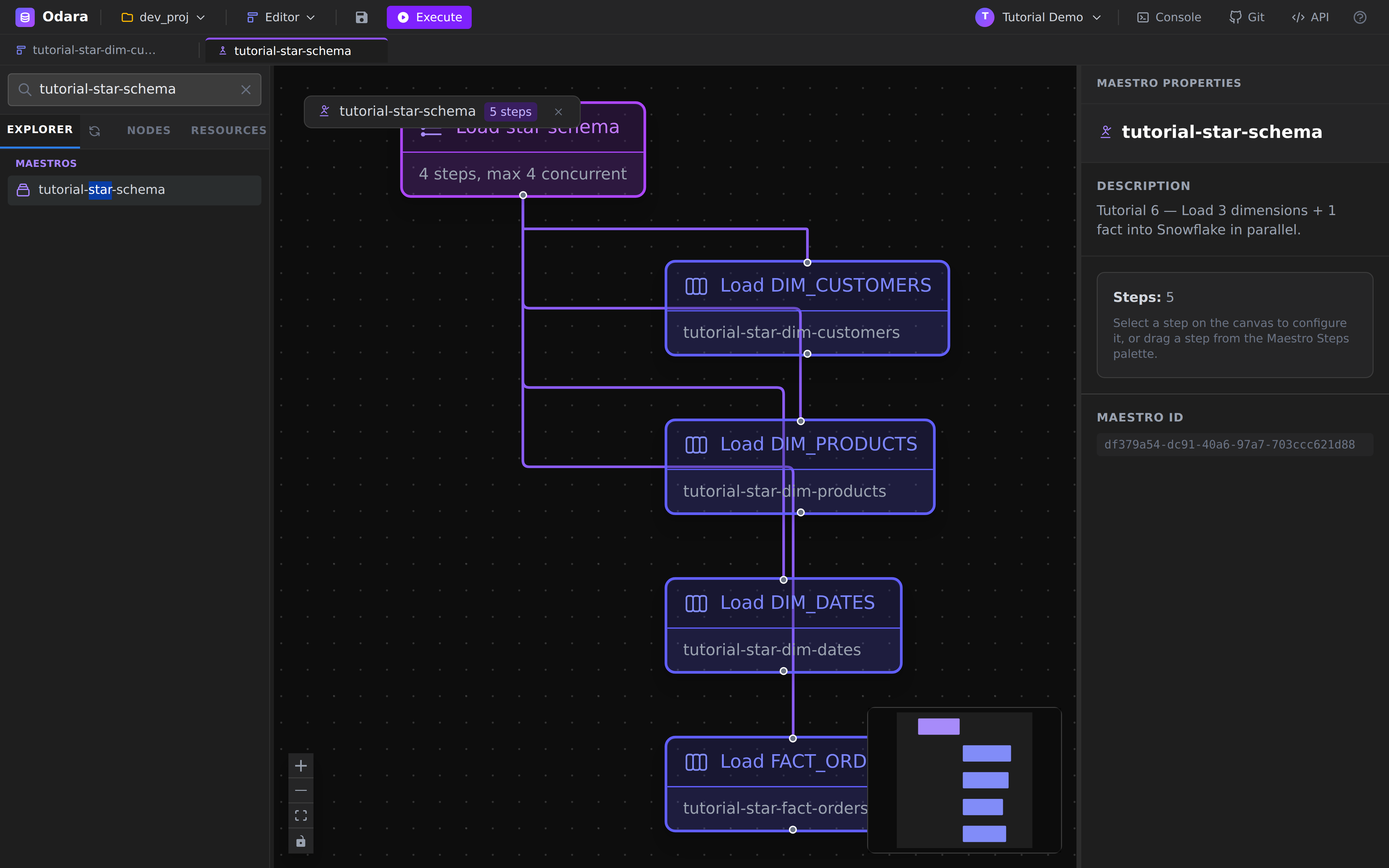
Star Schema → Snowflake — load with Maestro
Model a star schema (3 dims + 1 fact), build a Maestro from scratch to load all four into Snowflake in parallel, then JOIN the star at query time.
 10 min
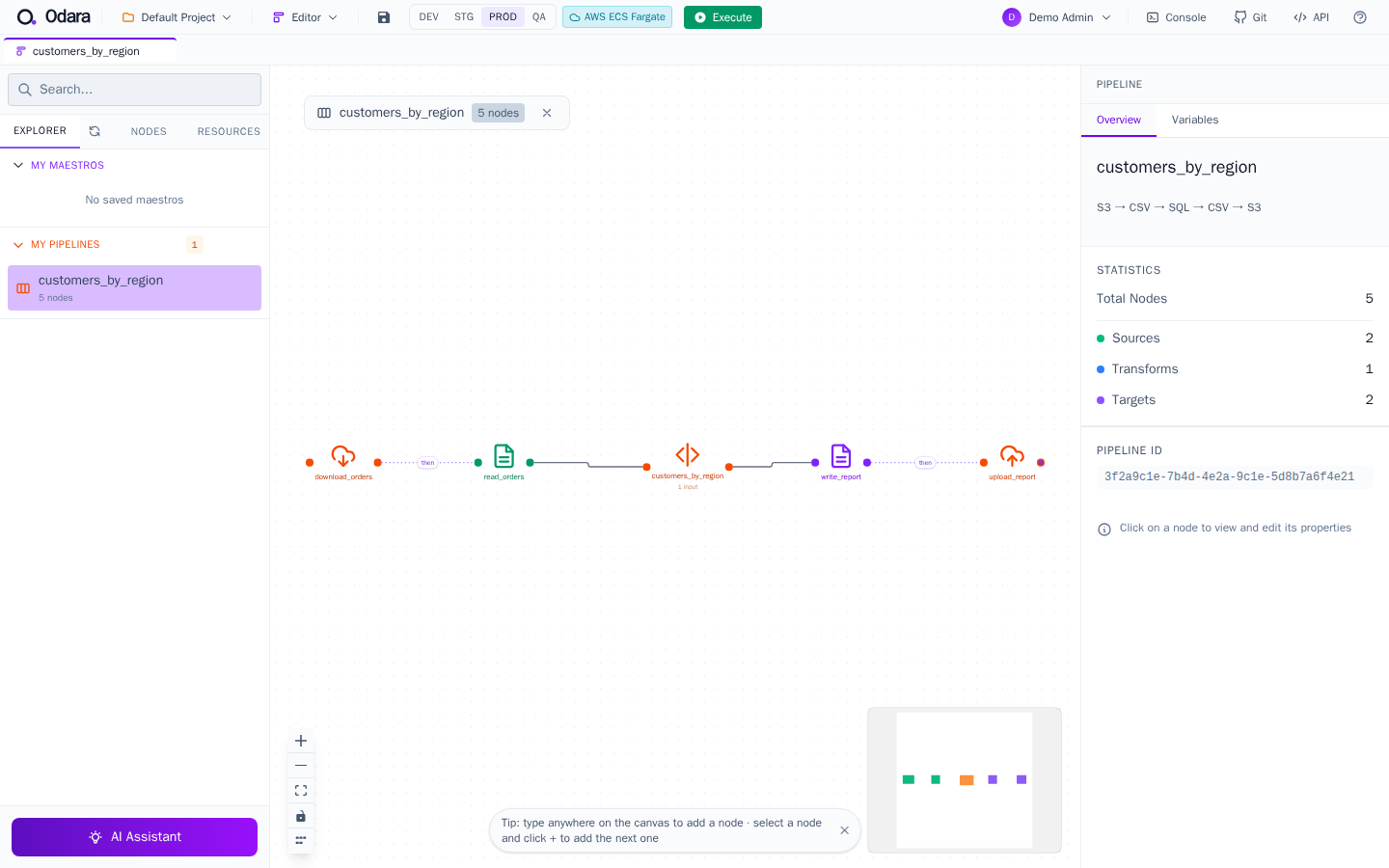
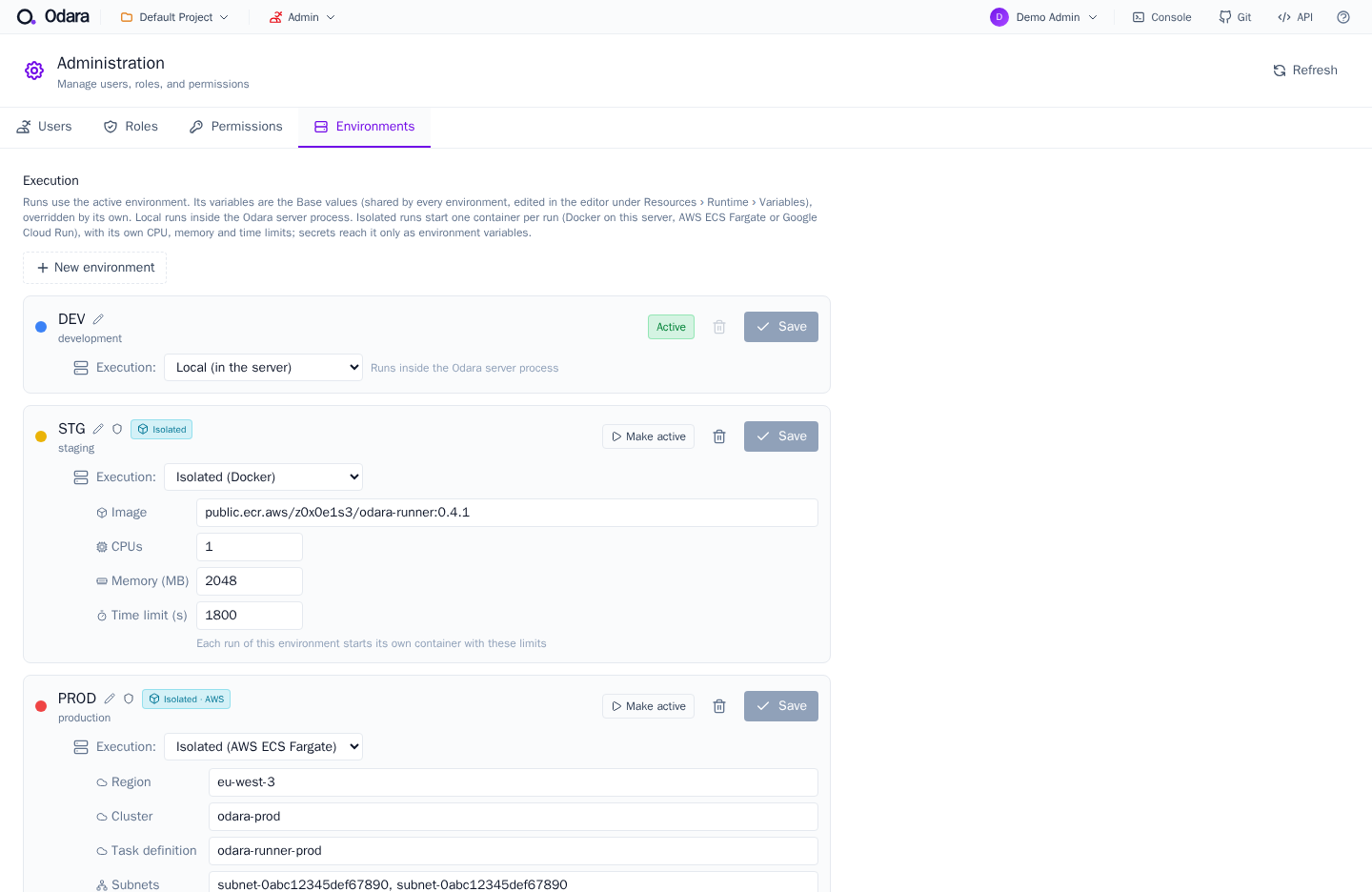
Environment per run and per schedule — DEV, STG, PROD without touching Admin
Run one pipeline Local in DEV, in Docker in STG, on AWS in PROD and on Google Cloud in QA from the editor’s top bar or the API, see it in the Monitor, and pin a schedule to an environment.
 15 min
Isolated runs on Docker — one container per run on your server
Get the odara-runner image (ECR Public, Artifact Registry or a download), let Odara use Docker, set an environment to Isolated (Docker) with CPU, memory and time limits, and run in it.
 25 min
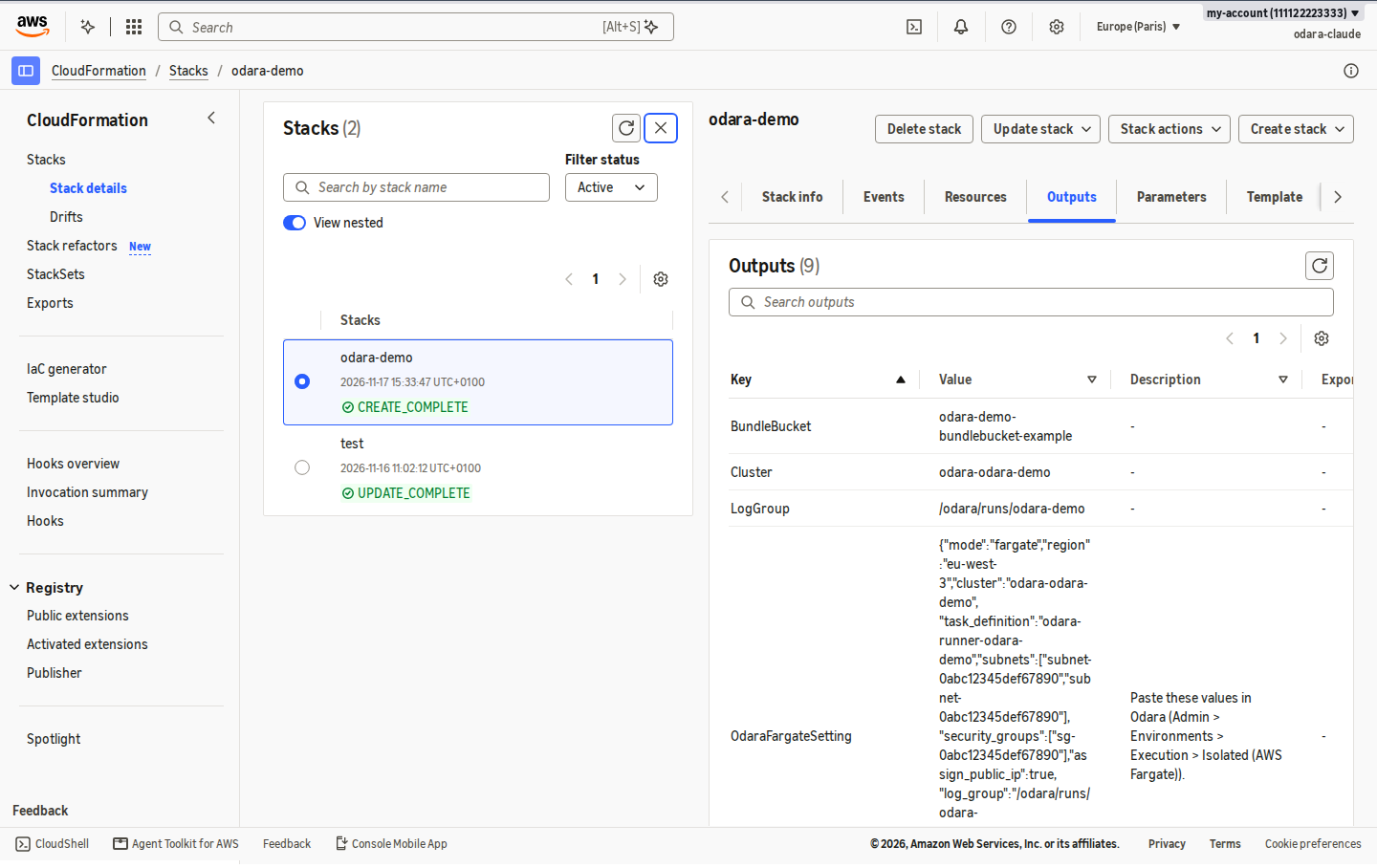
Isolated runs on AWS ECS Fargate — one cloud machine per run
A budget, one CloudFormation stack from the console, the server’s access key, then PROD set to Fargate: each run gets its own task, followed in Odara, ECS and CloudWatch. Delete it all in one click.
 25 min
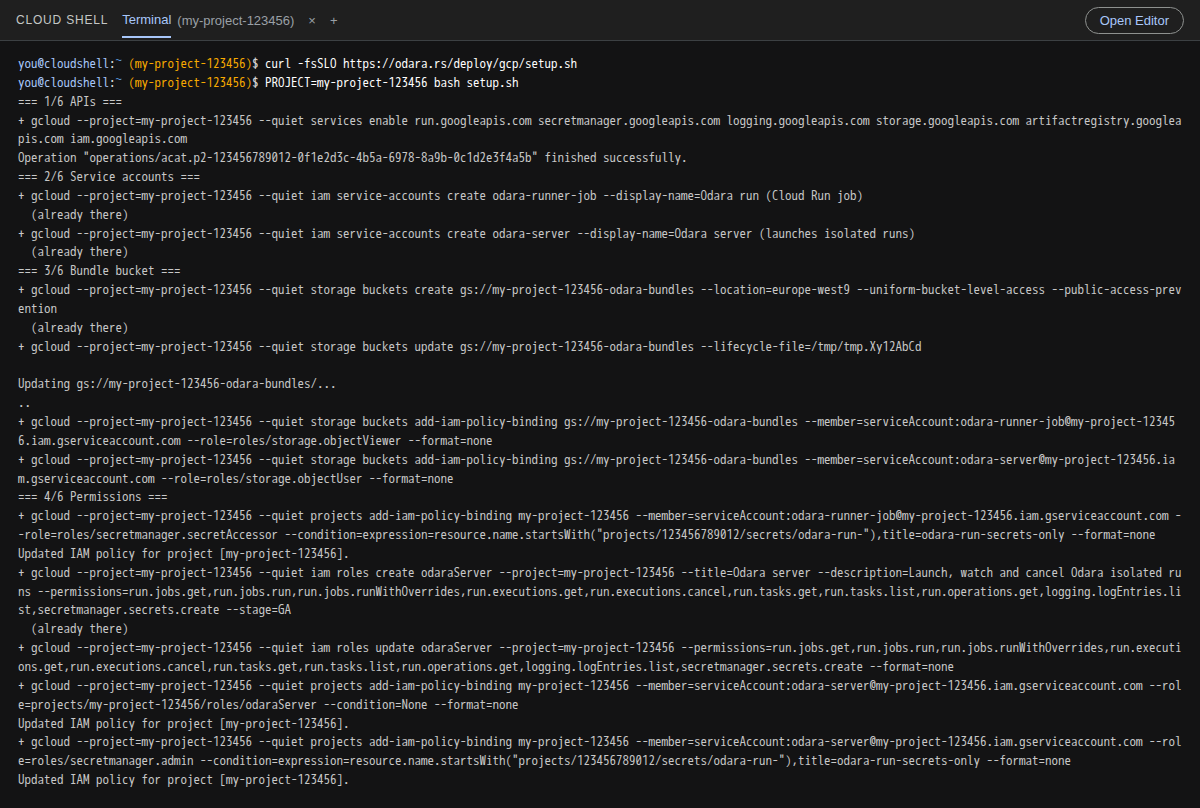
Isolated runs on Google Cloud Run — one job execution per run
A budget alert, setup.sh in Cloud Shell (job, service accounts, bucket, key), then an environment set to Cloud Run: each run is one job execution, followed in Odara, Cloud Run and Logging.